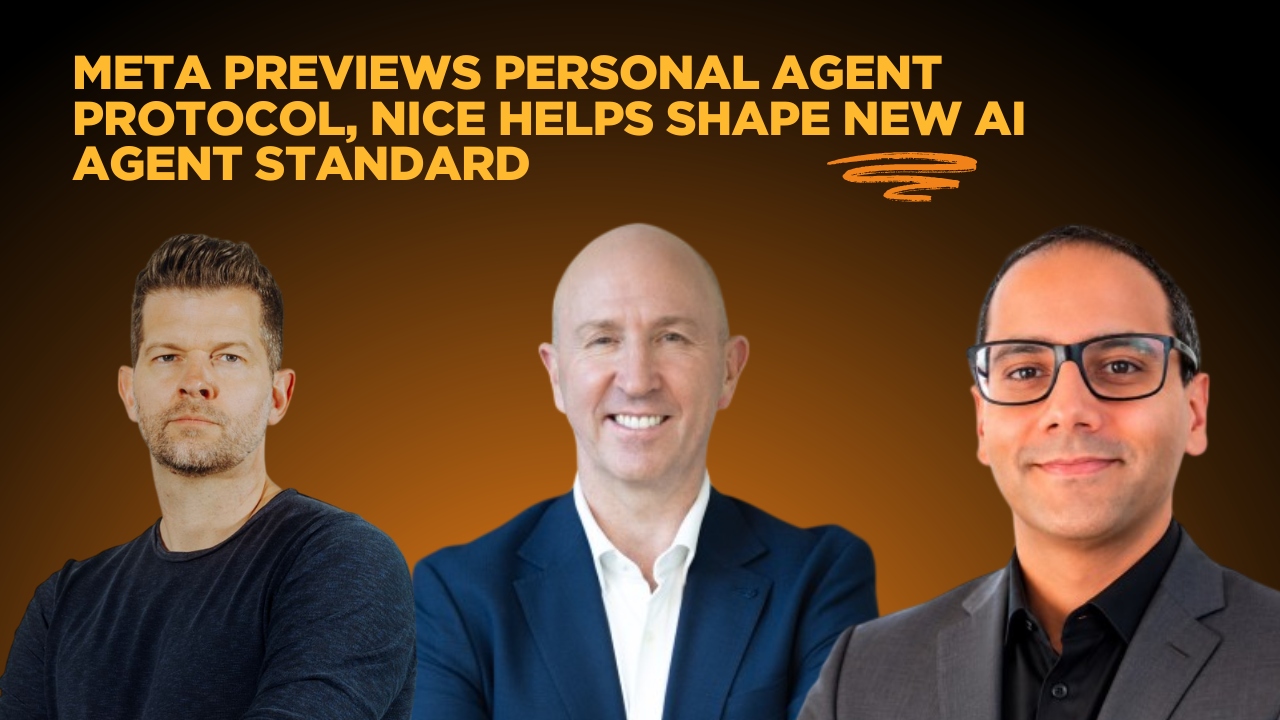
Scott Russell, CEO of NiCE: “Personal AI agents have endless time that consumers don’t, and that brings a new era of growth for customer service. Customers’ agents can sign in, ask follow-up questions on their behalf and get to resolution faster, which means more demand, more persistence and higher expectations. An open standard is how that demand reaches businesses with trust, and NiCE is proud to shape what comes next alongside Meta and others. Companies that compete every day agreeing on a standard so customers and enterprises both benefit is the industry at its best. Personal agents bring customers to the door, and resolution brings them back.”
Philipp Heltewig, Chief AI Officer, NiCE : “Personal agents already work for consumers, and today a customer’s agent and a company’s agent share a common language. When a customer’s agent arrives with a goal, like a refund or a rebooked flight, the business’s AI agent checks who it represents and what it is allowed to do, then works the request to resolution using the systems the business already runs on. When the case needs judgment, a person joins the same conversation with the full context, and every reply says who is responding. That is AI agents and people working as one crew, with clear jobs, shared context and a clean handoff. Enterprises decide which agents they serve, what access those agents get and when a person steps in, and now the conversation turns to what we build with it.”
Neeraj Verma, VP, Agentic AI, NiCE : “What I like about the Personal Agent Protocol is how much it solves with a simple design. A company publishes one document at a well-known address that lists its sign-in endpoints and interfaces, so an agent finds everything in a single request. Each personal agent gets its own token for each customer, with access scoped to what the company allows, and that same token works across APIs, web pages and conversations, so the experience stays consistent from first request to resolution. Every reply says whether an AI agent or a person is responding, and when a case calls for judgment, a person joins the same conversation with full context. Enterprises keep control throughout: they set which agents they serve, what access those agents get and when a person steps in.”