NVIDIA, Rebellions and SK Telecom announced on November 8 that they will build Korean sovereign AI inference systems on NVIDIA NVLink Fusion, with Rebellions’ Rebel R200 NPUs connected to NVIDIA’s platform and deployment expected in 2028. The plan splits each model response between two kinds of chip, which changes what an inference buyer would be committing to.
What the three companies announced
According to NVIDIA’s announcement, the companies will use NVLink Fusion to combine NVIDIA’s infrastructure platform, Rebellions’ Korean-designed AI processors and SK Telecom’s AI data center, model and service capabilities. Korea’s Ministry of Science and ICT (MSIT) supports the work. Rebellions will connect its Rebel R200 neural processing units (NPUs) to the NVIDIA platform through NVLink and will use the NVIDIA MGX rack architecture to build rack-scale systems. NVIDIA describes the R200 as optimized for low-latency, energy-efficient inference, including multitrillion-parameter mixture-of-experts models.
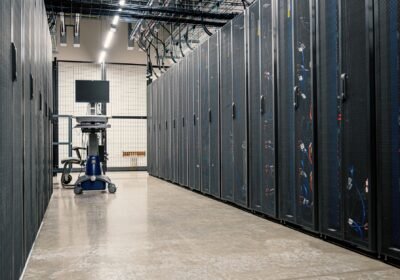
SK Telecom plans to deploy the systems in its AI data center and connect them with its A.X K2 model and public services under Korea’s AI for All project. NVIDIA says R200 systems are expected to be ready for deployment in 2028.
Two chips per response
The most specific technical detail in the announcement is how the work divides. The companies plan to assign different stages of response generation to different processors, using NVIDIA GPUs for prefill and Rebellions NPUs for decode. Prefill reads the whole prompt in one pass; decode then produces the answer one token at a time. The two stages stress hardware differently, which is why a vendor with a decode-focused chip can claim a role next to a general-purpose GPU.
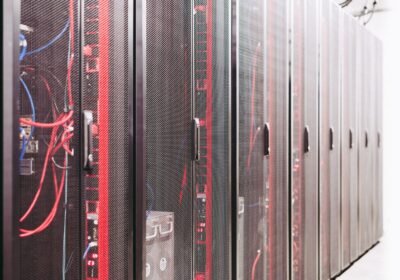
The announcement also lists what MGX supplies: shared rack footprint, power delivery and cooling designs, plus access to NVIDIA’s supply chain of original design manufacturers and component suppliers. For Rebellions, that removes the need to design its own rack and source its own components. For a buyer, it means the NPU rack and the GPU rack follow the same physical standard.
How this compares with earlier NVLink Fusion announcements
The Korean announcement follows a pattern NVIDIA has set with other chip makers this year. On March 31, 2026, NVIDIA announced a partnership with Marvell and said it has invested $2 billion in the company; Marvell supplies custom XPUs and NVLink Fusion-compatible scale-up networking, and NVIDIA supplies the Vera CPU, NICs, DPUs, NVLink interconnect and Spectrum-X switches. That release gave no dates for any deliverable.
On September 10, 2026, an NVIDIA blog post described d-Matrix connecting its next-generation Raptor XPUs through NVLink Fusion and running its racks alongside NVIDIA GPU systems such as Vera Rubin NVL72 for disaggregated inference. That post also gave no deployment dates. Against those two, the Korean announcement is the first of the three to carry a date, 2028, and the first to name a national government as a backer and a telecom operator as the deployer.
In all three cases the non-NVIDIA chip sits inside a system that NVIDIA’s interconnect, rack design and, per the Korean plan, its GPUs for prefill also occupy. NVLink Fusion lets other silicon in, and each announcement keeps NVIDIA hardware in the same rack. That is an observation from the announcements, and none of the three companies states it as a goal.
The software side of the Korea package
NVIDIA published a companion post the same day on its Dynamo inference-serving framework. It lists Dynamo deployment recipes for four Korean open models: A.X K2 from SK Telecom, K-EXAONE 2.0 from LG AI Research, Solar Open 2 from Upstage and Motif-3 from Motif Technologies. NVIDIA says the recipes are optimized for B200 GPUs and deliver up to 2x performance out of the box, and it gives no baseline or benchmark detail behind that figure. A buyer should treat it as a vendor claim until a test on their own workload confirms it.
What it means for the buying committee
The 2028 date matters most for planning. A committee signing an inference capacity contract in the next year will be buying GPU systems that exist today, and the NPU path described here cannot supply capacity inside that term. Any pitch for Korean sovereign inference capacity that cites this collaboration should be asked which hardware the contract delivers and in which year.
For teams weighing a heterogeneous inference stack later, the prefill and decode split raises specific diligence questions. Ask which software schedules requests between the two chip types and who supports it when a response is slow. Ask whether the NPU rack and the GPU rack are priced and supported as one system or two contracts. Ask what happens to the decode side if the GPU supply for prefill is constrained. The announcement does not answer these, and none of the three companies has published pricing or performance figures for the combined system.
Procurement teams outside Korea can use the same template. Our earlier coverage of Microsoft’s Maia 300 inference chip showed a hyperscaler building its own accelerator for the same inference workload, and our report on NVIDIA’s Hugging Face deal covered the software side of the same company’s position. Taken together, vendor roadmaps now describe inference as a stack that mixes chip suppliers, and the contract language needs to name the integrator responsible for the mix.
Sovereign AI buyers in other countries should read the Korean structure as a procurement model: a ministry backing a national operator that deploys a domestic chip, a domestic model and a shared rack standard. Whether that yields lower cost or better latency than buying GPU capacity directly is unproven, and the companies have not published a comparison. Ask for one before treating the structure as a reference design.
Source: NVIDIA Newsroom; NVIDIA Blog; NVIDIA and Marvell; NVIDIA and d-Matrix